Category: Uncategorized

  • Asian Bathroom Design: A Professional Approach to Balance, Materials, and Function

    Asian-inspired bathrooms are often misunderstood as purely decorative spaces defined by bamboo, pebbles, and neutral tones. In practice, authentic Asian bathroom design is about spatial discipline, material integrity, and functional calm. As a designer, I approach these interiors as architectural compositions—where proportion, texture, and furniture selection work together to create a controlled sensory experience.

    Below, I break down how to design an Asian bathroom correctly—without clichés and without sacrificing functionality.


    Spatial Planning: Calm Begins with Layout

    The foundation of any Asian bathroom is spatial clarity. The layout must feel intentional and balanced. Circulation paths are unobstructed, fixtures are aligned, and visual noise is minimized.

    I often recommend separating wet and dry zones clearly. A walk-in shower framed in glass, paired with a freestanding soaking tub positioned near natural light, establishes hierarchy. The vanity zone should not compete visually with the bathing area; instead, it should integrate seamlessly into the architectural lines.

    Symmetry is frequently used—but not rigidly. A double vanity bathroom layout works well in larger spaces, especially when designed with precise alignment and restrained detailing.


    Materials: Natural, Honest, Textural

    Material selection defines authenticity. Asian bathroom interiors rely on natural materials that age well and feel tactile—solid wood, stone, ceramic, and matte metals.

    I typically specify:

    • Teak or walnut for cabinetry
    • Natural stone or stone-look porcelain for flooring
    • Fluted or textured wood panels for vertical surfaces
    • Matte black or brushed brass fixtures

    The goal is not decoration—it’s depth. Surfaces should absorb light softly rather than reflect it harshly. Polished finishes are used sparingly.

    When selecting bathroom sinks and vanities bath vanity with sink configurations, I prioritize stone vessel basins or integrated ceramic tops that emphasize material continuity.


    The Vanity Area: Where Design and Function Intersect

    In Asian design, the vanity must feel architectural rather than ornamental. It should appear integrated into the space—not placed into it.

    Floating Bathroom Vanity for Visual Lightness

    A floating bathroom vanity is one of the most effective choices in this context. By lifting the unit off the floor, we create visual air and allow flooring materials to remain uninterrupted. This enhances the perception of space and reinforces the minimalist philosophy.

    For medium-to-large bathrooms, I often design custom vanities for the bathroom with handleless drawers, soft-close mechanisms, and concealed storage compartments. The objective is to eliminate visual clutter.

    Bathroom Vanity with Sink: Integrated Solutions

    A bathroom vanity with sink should feel monolithic. Integrated stone tops with seamless basins are preferable to drop-in sinks. If vessel sinks are used, they must align proportionally with the cabinet below.

    A bathroom vanity cabinet with sink must balance storage and minimalism. Deep drawers are more practical than traditional cabinet doors, especially for organizing daily-use items discreetly.

    In compact spaces, a small bathroom vanity with a slim-depth profile (16–18 inches) maintains usability without overwhelming the room. Wall-mounted faucets can further free up counter space.


    Lighting: Soft, Layered, Intentional

    Lighting in an Asian bathroom is never overly bright. It is layered and controlled.

    I specify:

    • Indirect LED strips beneath floating vanities
    • Recessed ceiling lighting with warm temperature (2700–3000K)
    • Backlit mirrors to eliminate shadows

    The mirror should not dominate the room. Framed wood mirrors or frameless designs integrated into wall panels maintain continuity.

    Lighting should enhance texture—highlighting grain in wood and veining in stone—rather than flattening the environment.


    Color Palette: Controlled and Grounded

    Neutral tones dominate—beige, warm gray, muted taupe, soft charcoal. Contrast is achieved through texture rather than color saturation.

    Dark wood paired with light stone creates a grounded, balanced composition. Black accents can frame the design but should not overpower it.

    I caution clients against introducing excessive decorative elements. In Asian bathroom interiors, restraint is sophistication.


    Storage Strategy: Concealed and Purposeful

    Effective storage defines long-term usability. Open shelving is minimal and intentional—perhaps a niche in the shower or a recessed wall compartment.

    Bath cabinets should align flush with walls and match surrounding finishes. The cabinetry should feel like part of the architecture, not separate furniture.

    For shared spaces, a double vanity configuration allows personal storage zones. Separate drawers beneath each basin prevent daily friction and maintain order.


    The Soaking Experience: A Design Anchor

    A deep soaking tub—whether freestanding or built-in—is often central to Asian bathroom design. It symbolizes ritual rather than routine.

    Placement matters. Ideally, it faces a window, textured wall, or natural focal point. Even in urban environments, frosted glazing or a vertical garden effect can introduce privacy and connection to nature.

    The tub should not compete with oversized decorative fixtures. Simplicity enhances presence.


    Small Asian Bathrooms: Precision Over Excess

    In smaller bathrooms, discipline becomes even more important. A small bathroom vanity combined with vertical storage and wall-mounted fixtures preserves movement.

    Use large-format tiles to reduce grout lines. Install a frameless shower enclosure. Keep accessories minimal—one plant, one textured element, one focal material.

    Asian design is not about adding—it’s about refining.


    Bringing It All Together

    Designing an Asian-inspired bathroom requires more than selecting bamboo accents or neutral paint. It demands spatial control, material integrity, and intelligent furniture selection.

    When I specify vanities for the bathroom in this style, I look for architectural simplicity, quality joinery, and integration with lighting and wall finishes. The bathroom vanity with sink must feel intentional and balanced. Bathroom sinks and vanities bath vanity with sink configurations should prioritize proportion and practical storage.

    Ultimately, an Asian bathroom succeeds when it feels composed, grounded, and effortless. Every line has purpose. Every material has weight. And every design decision supports calm—not just visually, but functionally.
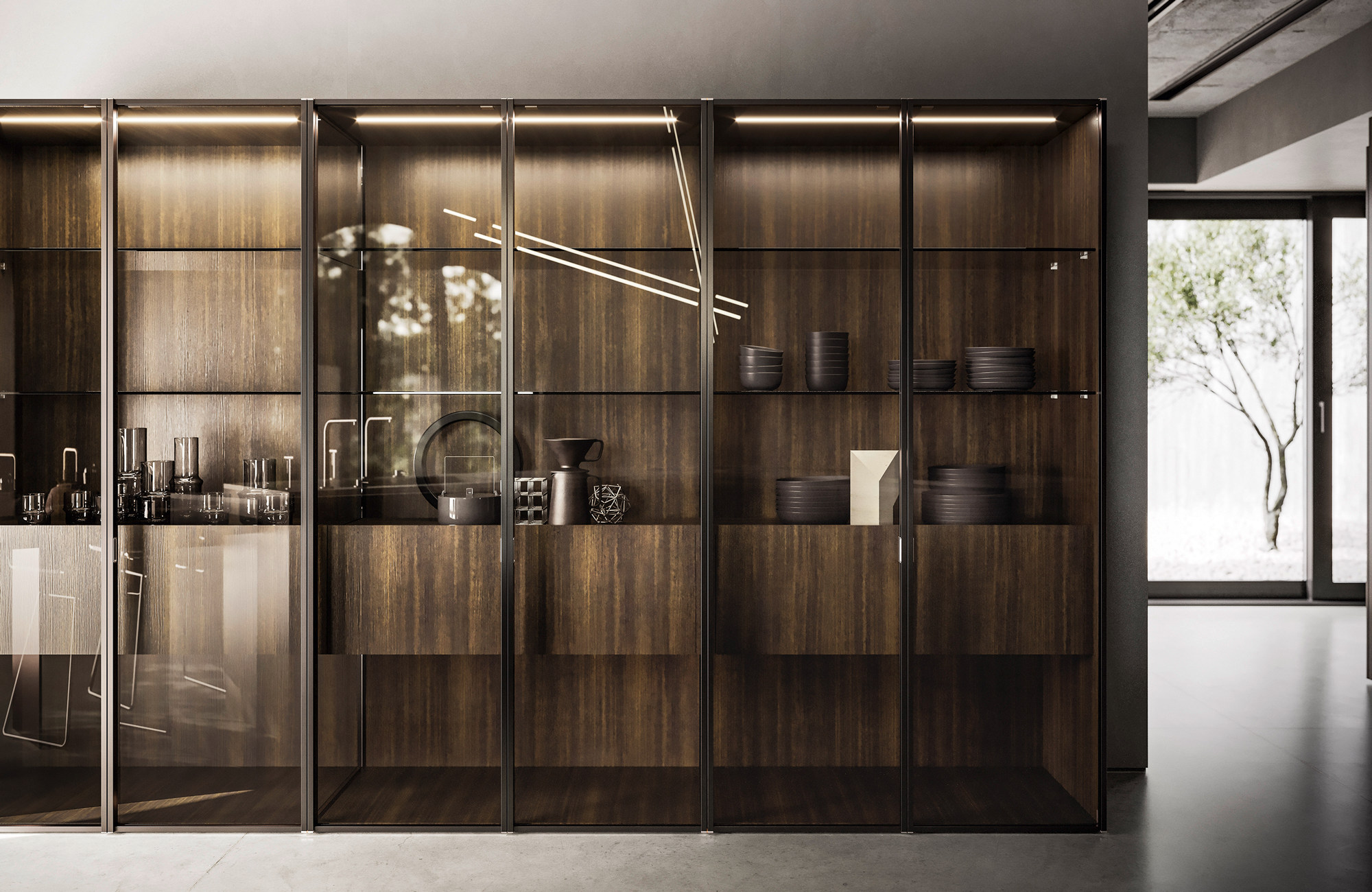
  • Modern Kitchen Cabinets: The Architecture of Contemporary Culinary Storage

    Modern Kitchen Cabinets: The Architecture of Contemporary Culinary Storage

    Modern kitchen cabinets represent the evolution of culinary storage from purely utilitarian fixtures to sophisticated architectural elements that define spatial hierarchy and establish material narratives. As the primary visual anchors within modern kitchen design, these cabinet systems must simultaneously address functional imperatives, aesthetic coherence, and the psychological comfort of domestic spaces. Understanding modern kitchen cabinets requires exploring their material composition, construction methodologies, and integration within contemporary kitchen units designs.

    Material Innovation in Modern Kitchen Cabinets

    Advanced Engineered Substrates

    Contemporary modern kitchen cabinets leverage engineered substrates that surpass traditional solid wood in dimensional stability and environmental sustainability. Cabinet makers increasingly specify medium-density fiberboard (MDF) and particleboard cores for modern kitchen cupboards, as these materials provide superior paint adhesion and eliminate the grain telegraphing common in wood cabinets kitchen applications. Custom kitchen cabinets utilizing these substrates accept contemporary finishing techniques including high-gloss lacquers and specialized coatings that achieve museum-quality durability.

    Thermoplastic Integration

    The evolution of thermoplastic wrapping technologies has revolutionized modern style kitchen cabinets manufacturing, enabling complex profiles impossible with traditional finishing methods. Cabinet builders employ polyvinyl chloride (PVC) and acrylic wrapping systems to create monolithic surfaces that resist moisture infiltration—a principle equally applicable to bath cabinets and vanities for the bathroom.

    Hybrid Material Systems

    Modern kitchen design increasingly embraces mixed-material approaches in custom cabinets, incorporating aluminum frames with wood or laminate inserts. These contemporary kitchen cabinets create visual tension between industrial precision and organic warmth while enabling ultra-thin profiles that maximize interior volume.

    Design Typologies and Construction Methods

    Frameless European Systems

    Modern kitchen units employ the 32mm system, originating from German manufacturing standards, which utilizes a precise grid of holes drilled at 32mm intervals. This approach enables complete modularity in modern kitchen cabinets while eliminating the face-frame’s visual weight, creating seamless expanses characteristic of contemporary kitchen cabinets.

    Integrated Handle Geometries

    Modern kitchen cabinets ideas increasingly incorporate handle solutions directly into door and drawer profiles. Custom kitchen cabinets feature routed finger pulls, chamfered edges, and integrated channels that eliminate protruding hardware while maintaining the monolithic character essential to modern kitchen styles.

    Color Psychology in Modern Kitchen Design

    Strategic Color Deployment

    Kitchen cabinet design employs chromatic hierarchy to establish visual weight distribution. White kitchen cabinets create perceived ceiling height expansion and remain the cornerstone of white kitchen aesthetics. Conversely, black cabinets kitchen installations ground compositions while concealing wear patterns. Modern kitchen cabinets ideas often incorporate two-tone approaches, allowing accent integration without overwhelming compact spaces.

    Surface Treatment Options

    Modern kitchen cupboards utilize surface textures that dramatically influence light reflection and tactile experience. Matte finishes in white kitchen cabinets absorb light to create sophisticated atmospheres, while gloss surfaces in contemporary kitchen cabinets amplify illumination and create dynamic reflections.

    Spatial Organization and Ergonomic Optimization

    Anthropometric Considerations

    Kitchen cabinet design must respond to human scale and reach patterns. Modern kitchen cabinets maintain counter-height working surfaces typically ranging from 34-36 inches, while kitchen counter cabinets should provide 18-24 inches of clearance above countertops to accommodate task lighting and prevent interference during food preparation.

    Storage Density Maximization

    Contemporary modern kitchen cabinets employ sophisticated organizational systems including full-extension drawer slides, pull-out shelving, and rotating mechanisms. Custom cabinets incorporating these systems can increase usable storage capacity by up to 40% compared to traditional fixed-shelf configurations, making them attractive despite higher kitchen cabinet prices.

    Vertical Integration Strategies

    Floor-to-ceiling modern kitchen units create continuous visual planes that enhance perceived room height while maximizing storage density. Cabinet makers integrate crown molding and light rail details to ensure seamless transitions between modern kitchen cabinets and architectural elements.

    Hardware Integration and Mechanical Systems

    Advanced Closing Mechanisms

    Modern kitchen cabinets utilize hydraulic and pneumatic closing systems that eliminate door and drawer slamming while extending hardware lifespan. These mechanisms, standard in custom kitchen cabinets, provide consistent closing speeds regardless of load weight and contribute to the premium tactile experience expected in modern kitchen design.

    Concealed Hardware Technology

    Contemporary kitchen cabinets employ European cup hinges that enable complete door adjustment in three dimensions while remaining invisible when doors are closed. Cabinet builders specify these systems to accommodate doors up to 2 inches thick while maintaining precise alignment throughout their operational lifespan.

    Professional Installation and Fabrication

    Custom Cabinet Manufacturing

    Cabinet makers employing precision measurement technology ensure accurate field dimensions and minimize material waste during fabrication of custom kitchen cabinets. Three-dimensional scanning capabilities document existing conditions and identify potential conflicts before modern kitchen cabinets production begins.

    Cost Considerations

    The cost of kitchen cabinets varies significantly based on construction method, materials, and customization level. Modern kitchen cabinets from reputable cabinet builders typically command premium pricing due to advanced materials and sophisticated hardware systems. However, the investment reflects superior durability and enhanced functionality compared to standard kitchen and cabinets offerings available at typical cabinets store locations.

    Modular Assembly Advantages

    Factory-assembled modern kitchen units arrive at installation sites with superior quality control compared to field-assembled alternatives. This approach, preferred by experienced cabinet makers, reduces installation time while ensuring consistent joint quality and hardware alignment in modern kitchen cabinets.

    Illumination Integration

    Under-Cabinet LED Systems

    Linear LED strips integrated beneath modern kitchen cupboards eliminate shadows on work surfaces while creating ambient illumination. Color temperature selection between warm and cool allows for task-appropriate lighting conditions that complement both white kitchen cabinets and darker contemporary kitchen cabinets.

    Interior Illumination

    Motion-activated LED systems within modern kitchen cabinets transform storage accessibility while creating dramatic display opportunities. These systems, increasingly standard in custom cabinets, operate on low-voltage DC power for safety and energy efficiency.

    Sustainability and Environmental Responsibility

    Formaldehyde-Free Construction

    Contemporary modern kitchen cabinets increasingly employ no-added-formaldehyde substrates to minimize indoor air quality impacts. Cabinet builders specify these materials to maintain structural performance while supporting healthier interior environments—considerations equally important for bath cabinets and vanities for the bathroom.

    Renewable Resource Integration

    Rapidly renewable materials including bamboo offer sustainable alternatives for modern kitchen cupboards while providing unique aesthetic characteristics and comparable performance metrics to traditional wood cabinets kitchen applications.

    Future Directions in Modern Kitchen Cabinet Design

    The sophistication of modern kitchen cabinets demands integrated thinking that considers material performance, ergonomic functionality, aesthetic coherence, and environmental responsibility. Successful cabinet builders synthesize these complex requirements into cohesive solutions that enhance both daily functionality and long-term property value. Whether specifying white kitchen cabinets for timeless appeal or black cabinets kitchen installations for dramatic contrast, modern kitchen design continues evolving to meet changing lifestyle demands while maintaining the fundamental principles that define exceptional contemporary kitchen cabinets.

    Kitchen cabinets kitchen cabinets represent more than storage solutions—they embody the intersection of craftsmanship, technology, and design philosophy that defines modern culinary environments. As kitchen cabinets ideas continue evolving, the collaboration between homeowners, designers, and cabinet makers ensures these essential elements remain at the forefront of residential design innovation.